Disclosure: I build Zoho systems for a living, so I have a commercial interest in this topic. The system below is a sample I built in my own Zoho org with synthetic data — not client work — and I say plainly what I did not verify.
The short answer: if new members keep slipping away before their first visit, the follow-up can run itself: a Bookings page for the visit, a daily Deluge scan in the CRM that sends invitations on day 3, 7 and 14, a ledger so nobody is emailed twice, and a task for a person when automation should stop. The catch is that the sync between Bookings and CRM tells you less than you would expect, and the design has to cover the gaps.
What problem does this solve?
A new member signs up, gets a welcome email, and never books the first check-in visit. Two weeks later they have forgotten why they joined.
The follow-up usually dies in a spreadsheet: someone has to notice who has not booked, remember who was already reminded, and send the next nudge by hand. It works until the list gets long, which is exactly when it matters.
I built the follow-up as a small system in Zoho Bookings + Zoho CRM, to check what it actually takes. The requirements came from a real job posting I evaluated (a fixed-price "new-member check-in automation" request).
How does the system work?
- A member registers in Zoho CRM. A member flag and a registration date are all the automation needs to start.
- Zoho Bookings provides the public booking page. Bookings sync into the CRM as Meetings.
- A scheduled Deluge function runs every morning. It recalculates each member's status from their current Meetings, sends the invitations that are due, and creates tasks for the cases a human has to handle.
- Invitations go out on day 3, day 7 and day 14 after registration. After the third invitation, the member moves to personal follow-up with an owner task, instead of getting a fourth automated email.
- Every send is written to a ledger (a custom module) before the email goes out, so a re-run never sends the same invitation twice.
- If a member books, the invitations stop. If they cancel, the cycle continues. If they no-show, a shorter second cycle starts.
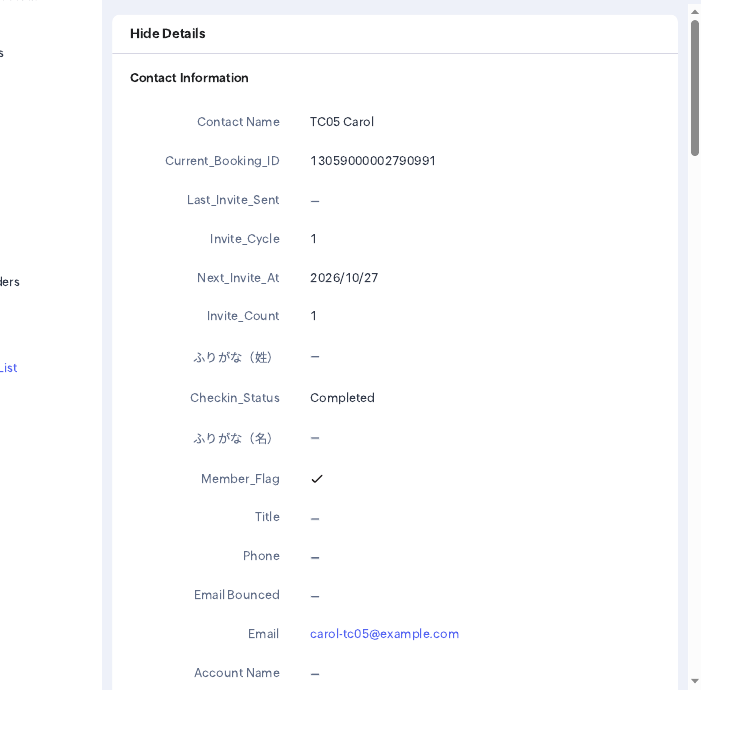 The contact record carries the follow-up state: check-in status, invite cycle and next invite date.
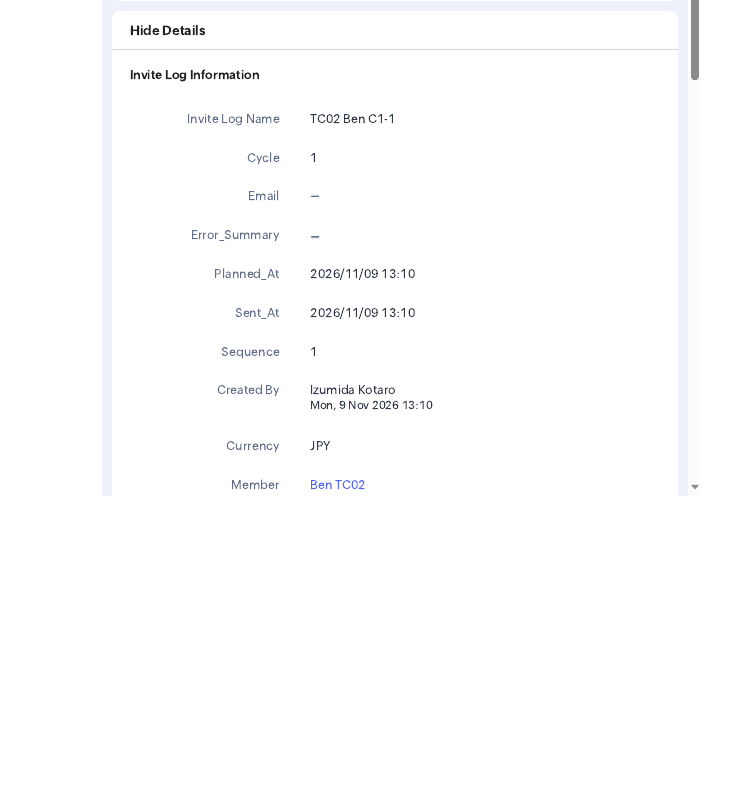 Every invitation is written to a ledger with planned and sent timestamps, so nobody is emailed twice.
What did measuring the sync show?
The build worked. The interesting part is what the measurement showed about the platform, because three of the findings changed the design.
Marking a booking "Completed" in Bookings does not reach the CRM. I completed a booking in Bookings and compared the synced Meeting field by field: nothing changed. No status, no check-in fields. So the automation cannot know a visit happened from the Meeting alone. The design consequence: staff confirm the result in the CRM (Completed or No-show), and the function creates an "unconfirmed result" task when a visit has ended and nobody confirmed it by 17:00 on the next business day. The task exists to close exactly that gap.
A cancellation deletes the Meeting — and that is the signal. Reschedules arrive as time updates on the same Meeting; cancellations delete it from the CRM entirely. So "the tracked Meeting is gone" is how the function detects a cancellation. It downgrades the member back to Invited only when the contact record is at least an hour old, because the sync itself lags by about two minutes and a fresh booking must never be mistaken for a vanished one.
The booking number hides behind a namespaced field. The Meeting screen shows a BookingId (KO-00007 and so on), but the API does not return it under that name. The real key in my org was zohobookingstest__BookingId — an extension namespace that can differ per installation. Hardcoding it would have been the easy mistake. The function scans the record's keys for one containing __BookingId instead, and stores the booking number on the contact, so the current booking is always traceable.
Two smaller notes, both measured on the Free plan of Bookings: the Free plan allows one service and one reminder, and mapping custom fields from Bookings into the CRM is a Premium feature. The sample runs within those limits on purpose; nothing was upgraded.
And one field observation, flagged as such: the clock inside a scheduled Deluge function (zoho.currenttime) ran exactly 17 hours behind the true time in my org (Asia/Tokyo), even after the org timezone was set correctly. The function rebuilds "now" with a measured constant correction. I have verified this only in my own org; treat it as a "test this in yours" item, not a platform guarantee.
Which design decisions carried the build?
- Recalculate, don't track events. The function derives status from the current Meetings on every run instead of reacting to event order. A missed update or a reordered sync cannot corrupt the state.
- Completed is terminal. Once a member is confirmed Completed, the function never writes to that record again.
- Ledger first, then send. The invitation row is created before the email. If the ledger write fails, nothing is sent. The honest guarantee is at-least-once with same-day duplicate protection — exactly-once email is not something the standard features can promise, and the design says so.
- Unconfirmed tasks only while the result is actually pending. An early version also raised the task for members whose no-show was already confirmed and who had moved into the next invitation cycle — pure noise, caught by a test case and fixed by keying the task to the Booked state only.
- Incomplete data means no absence-based decisions. If any list load hits the 200-record page cap, the run skips cancellations and invitations rather than guessing. At production scale the list loads switch to COQL.
What test evidence is there?
Nine test cases ran against synthetic members on 2026-11-09, all passing: initialisation, the first invitation (confirmed delivered to a real inbox), idempotent re-runs, booking detection, reschedule, cancellation downgrade, staff-confirmed completion, the no-show second cycle, and the unconfirmed-result task. The remaining cases (edge conditions around the follow-up handover and re-booking after a completed cycle) are scheduled for the next phase and are not claimed as verified yet.
What are the limits?
- This is a sample built in my own Zoho org with synthetic data. It is not client work and not a production deployment.
- Verified on Zoho Bookings Free and a Zoho CRM Ultimate trial. Behaviour on other CRM plans was not tested.
- Member counts in the hundreds or more were not tested; the COQL switch described above is the planned path.
- Whether a No-show mark in Bookings propagates was not verified. Completed does not; I am not claiming the same for No-show without measuring it.
The point is not that Bookings and CRM sync. They do, within limits. The point is that the follow-up only becomes reliable once you design for what the sync does not tell you — and you only learn that list by measuring it.